Learn how to write audio objects with this book.
By Eric Lyon
http://www.amazon.com/Designing-Objects-Computer-Digital-Series/dp/0895797151
- Update 3/17/2017 new website and code: http://disis.music.vt.edu/eric/main/designing-audio-objects-updates/
Learn how to write audio objects with this book.
By Eric Lyon
http://www.amazon.com/Designing-Objects-Computer-Digital-Series/dp/0895797151
A Tutorial using Visual Studio Express.
By Benoit Bouchez
updated 11/5/3013
Bidirectional analog/digital conversion of composite, s-video, and firewire/ilink.
By Grass Valley
http://www.grassvalley.com/products/advc110

Using this device on Mac OS X 10.9, analog video input shows up as a system device. It also works as a firewire video output device.
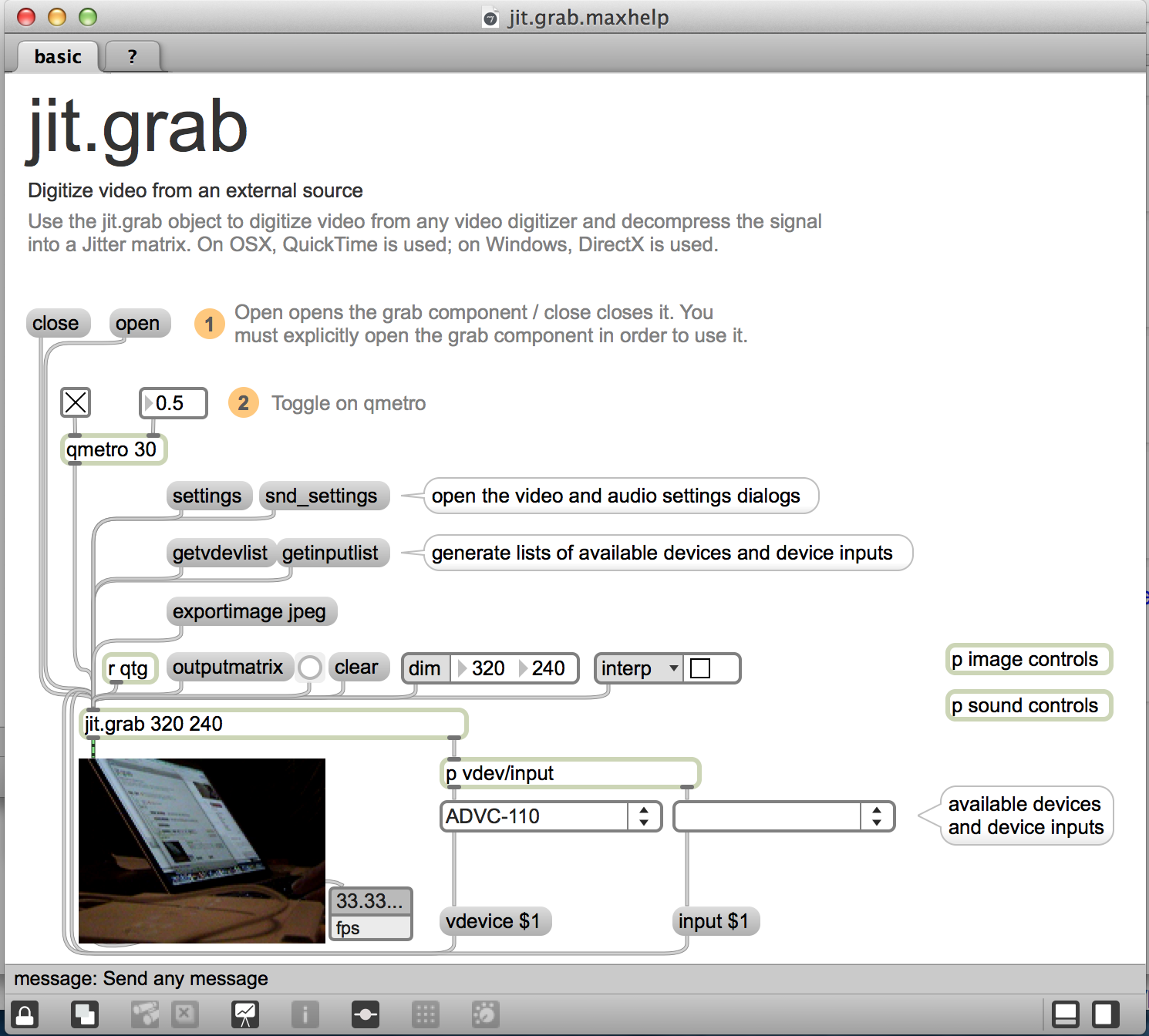
Using Jitter you can get real time input from analog video devices like cameras and VCR’s. Here’s an example using jit.grab (Max help file) to get input from an analog camcorder.
Sending output via firewire to a TV using jit.qt.videoout (Jitter tutorial 22):
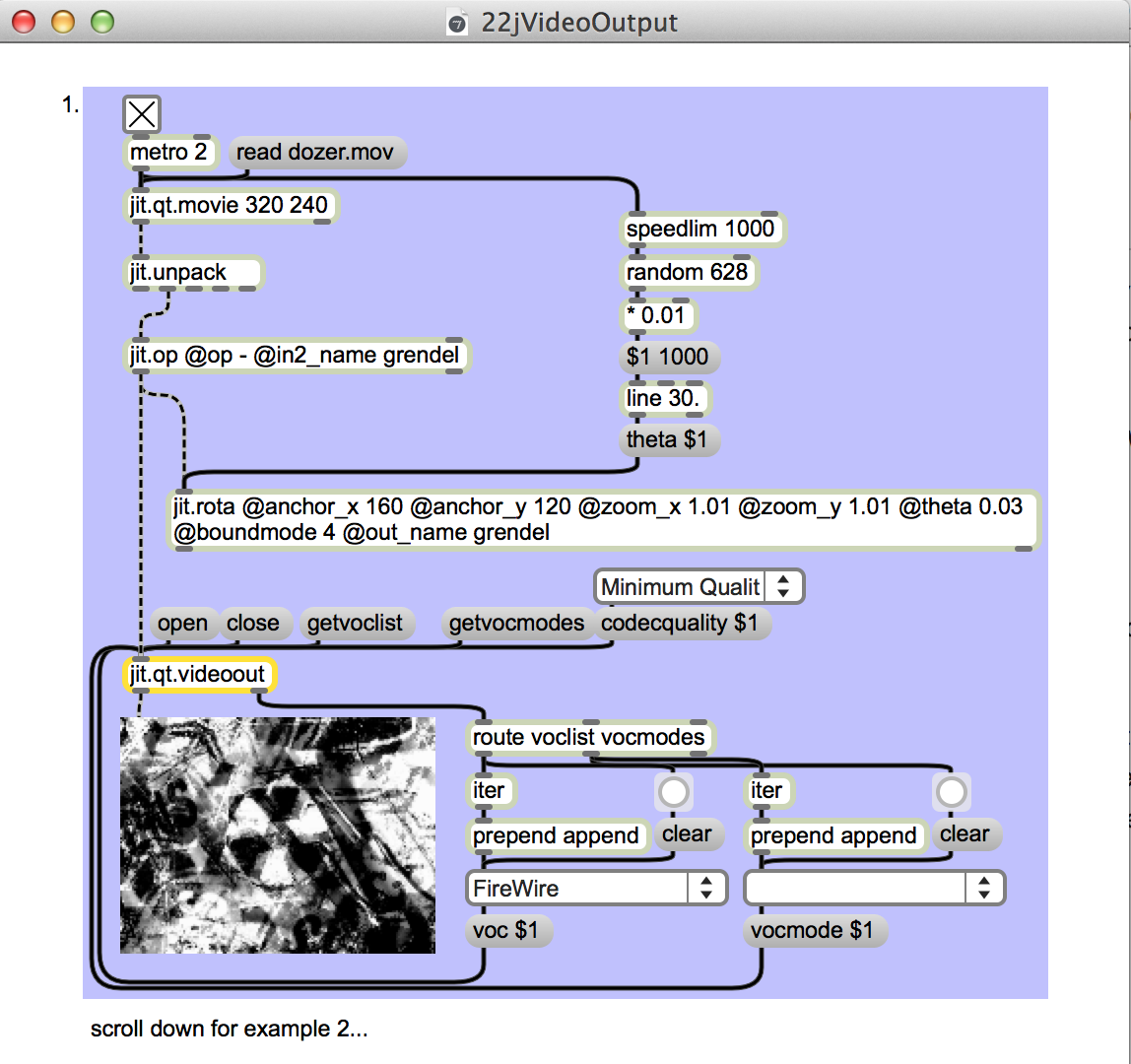
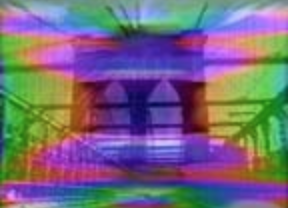
This is what it looks like on a TV:

“To encourage the creation of work using new electronic media technologies…”
http://www.experimentaltvcenter.org
Visualization and analysis
By Amit Kohli
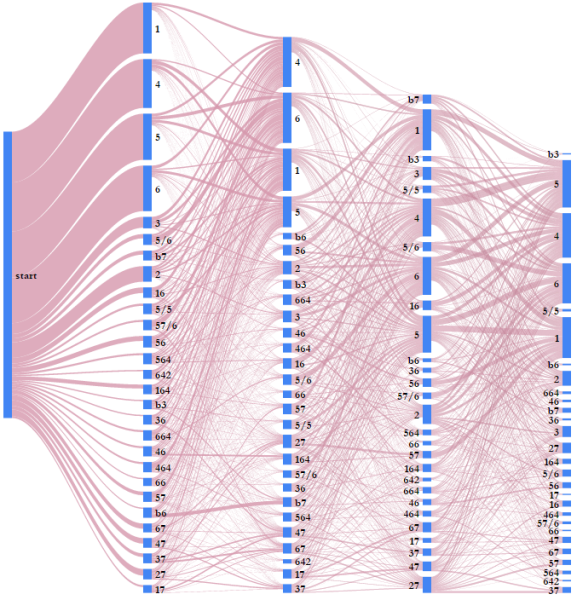
“If you’re a musician, try weird progressions! I know that what sounds good sounds good, but jeez… how will humanity ever learn to be creative if everyone keeps doing the same thing over and over?”
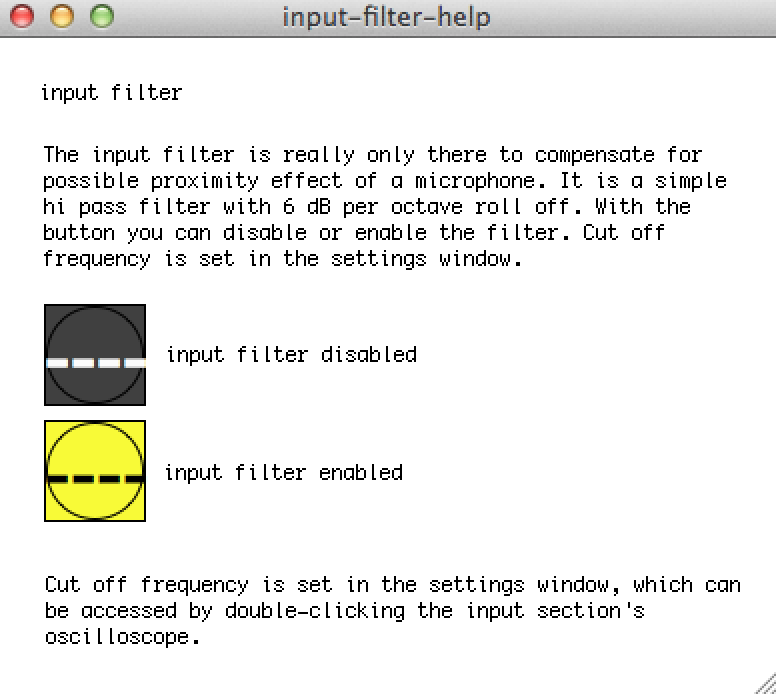
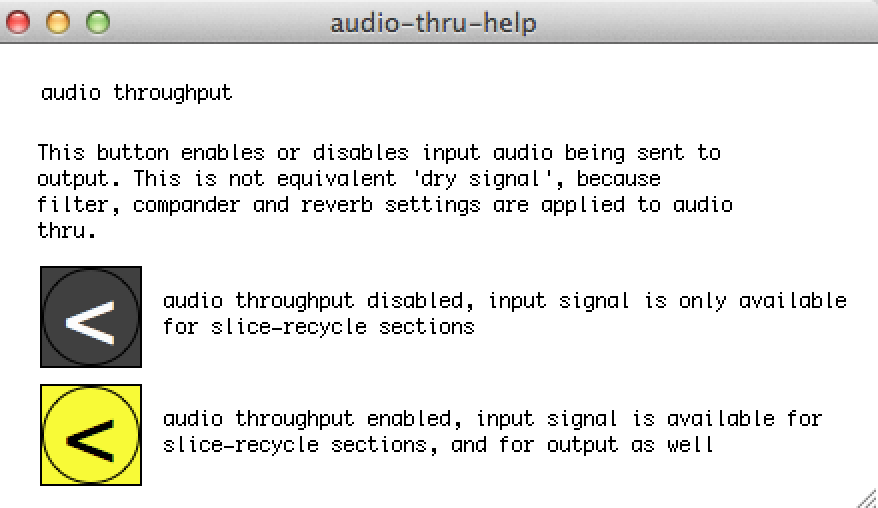
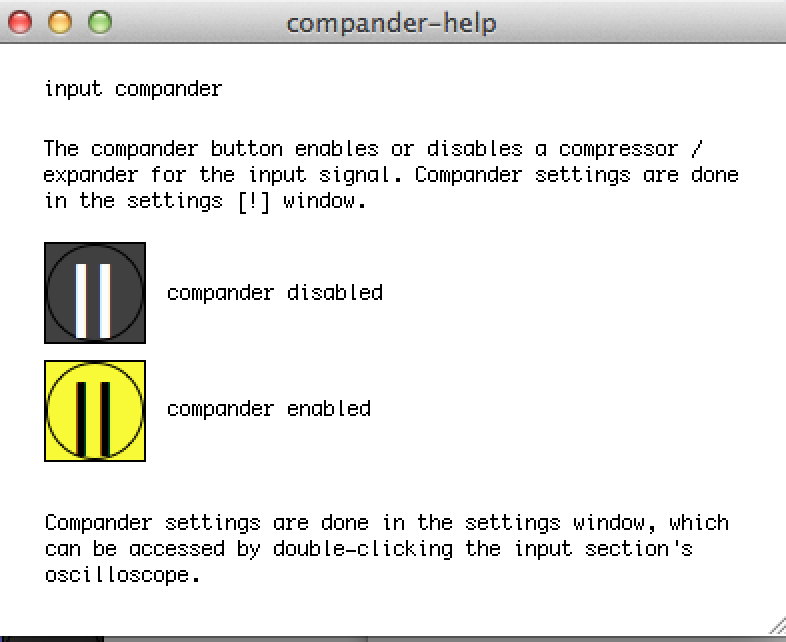
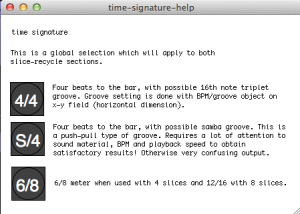
A compilation of Pd help screens.
Slice//Jockey is an interactive audio performance instrument
by Katja Vetter
http://www.katjaas.nl/slicejockey/slicejockey.html
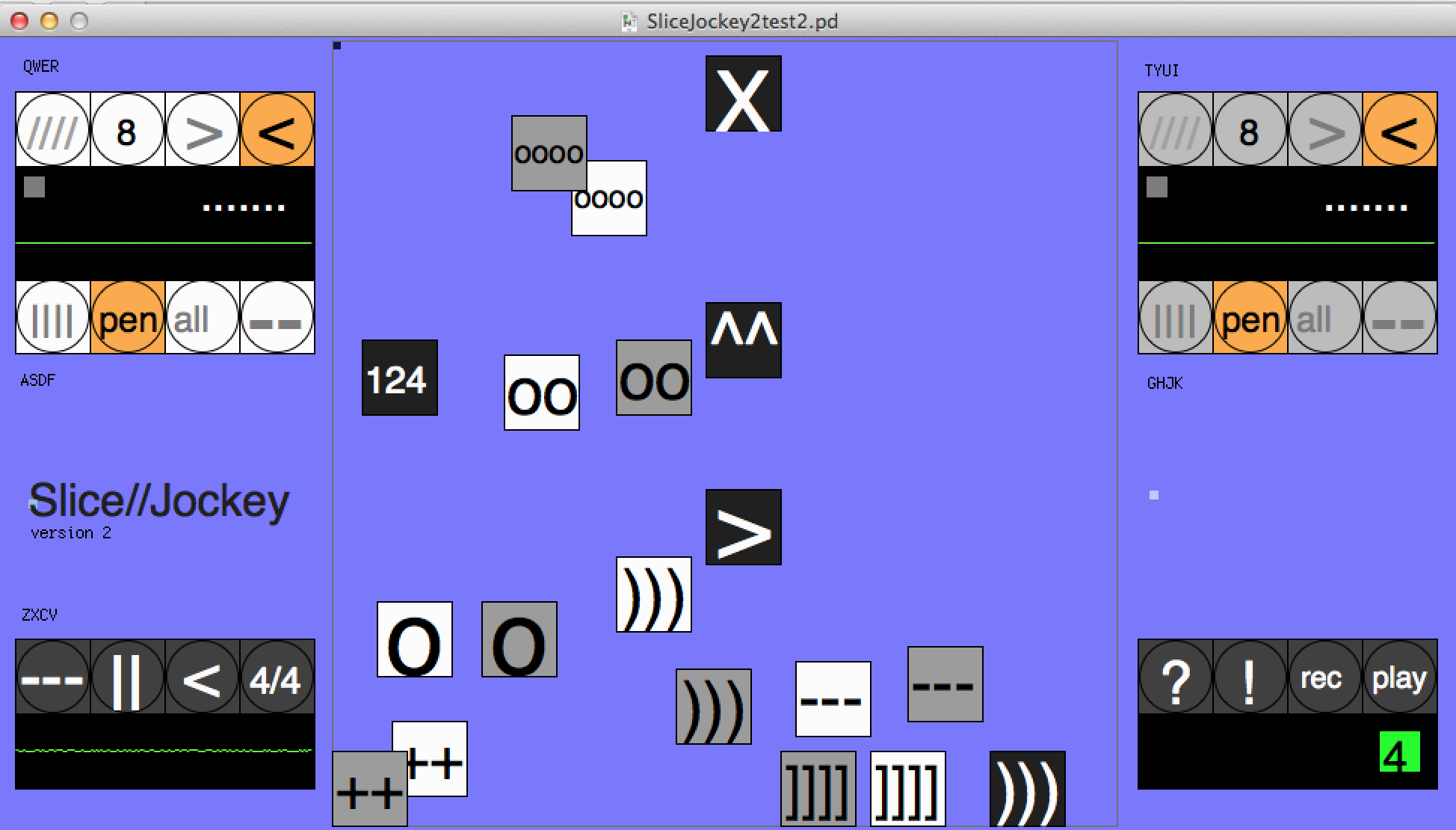
Click any of the screenshots to see a full size image.
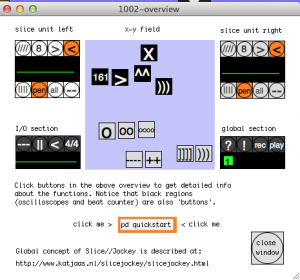
The x-y origin is in the lower left corner. In the x plane numbers increase from left to right. In the y plane numbers increase from bottom to top.
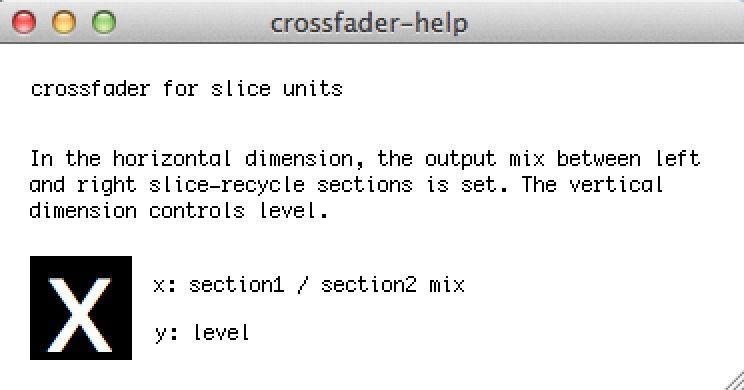
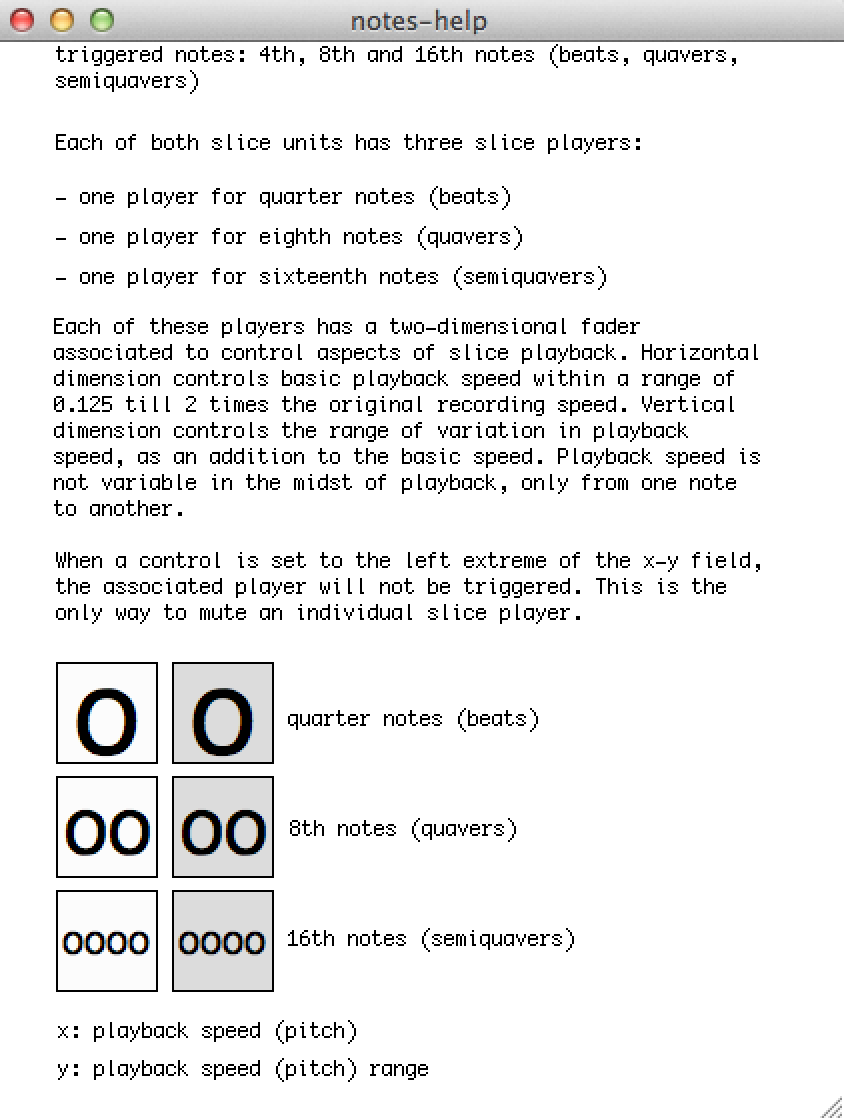
Notes on notes:
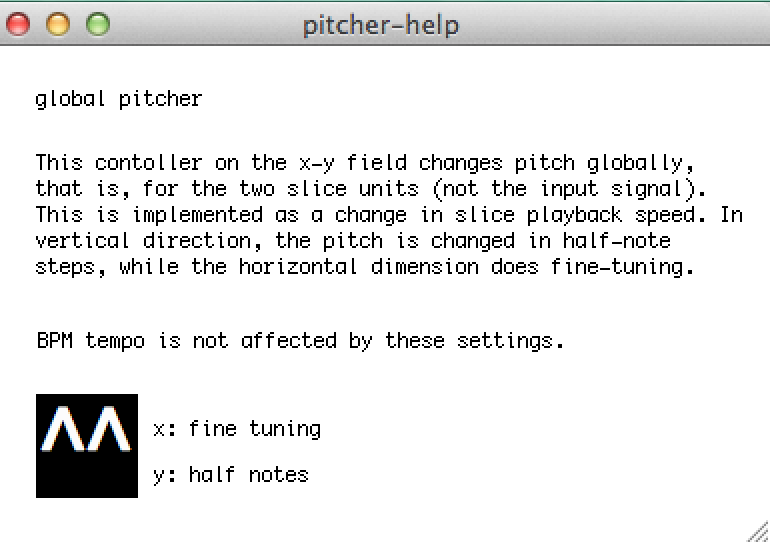
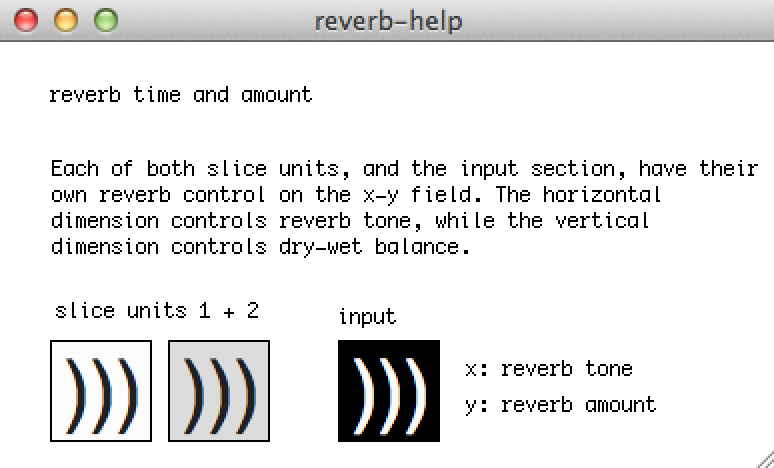
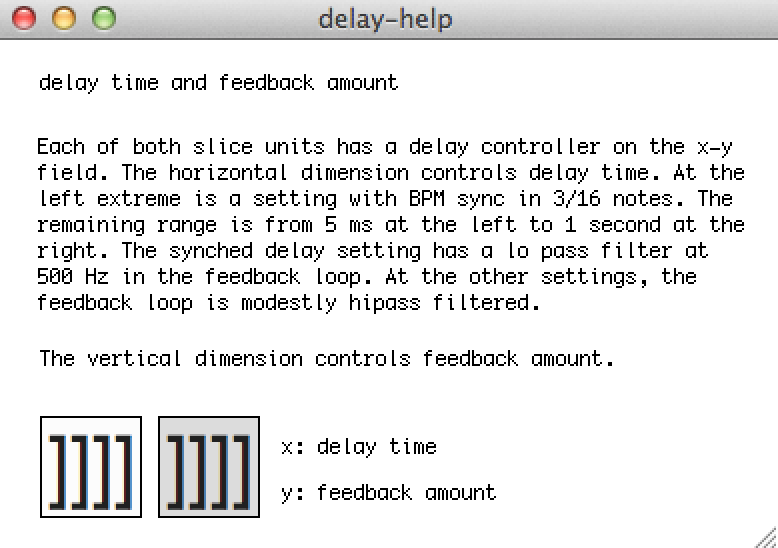
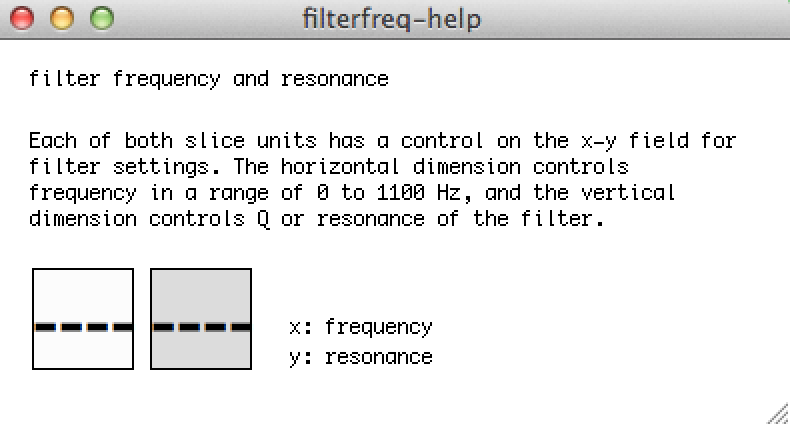
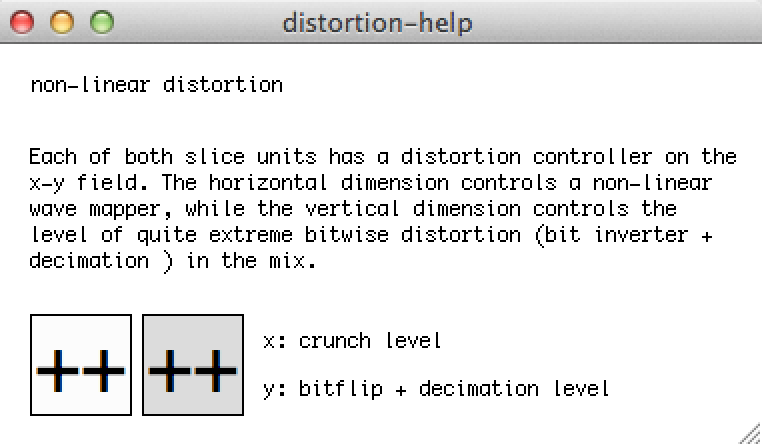
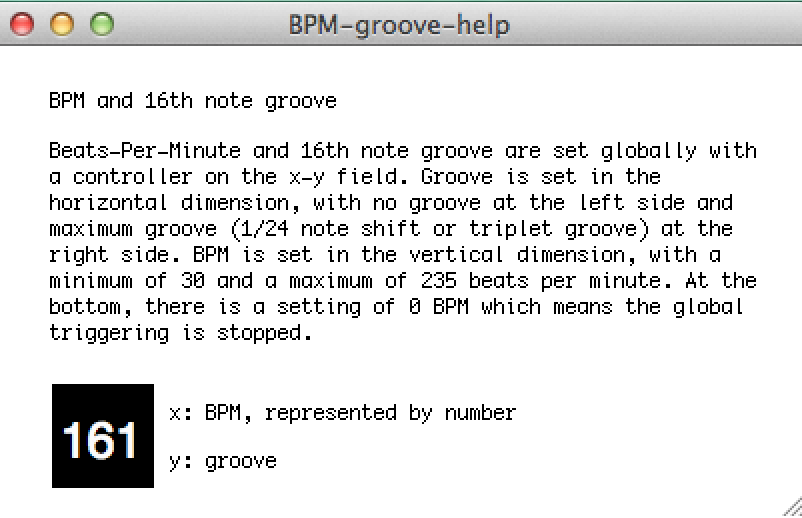
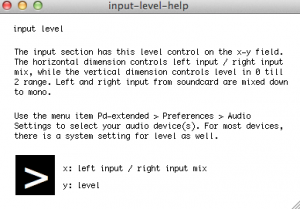
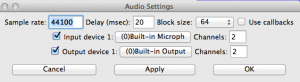
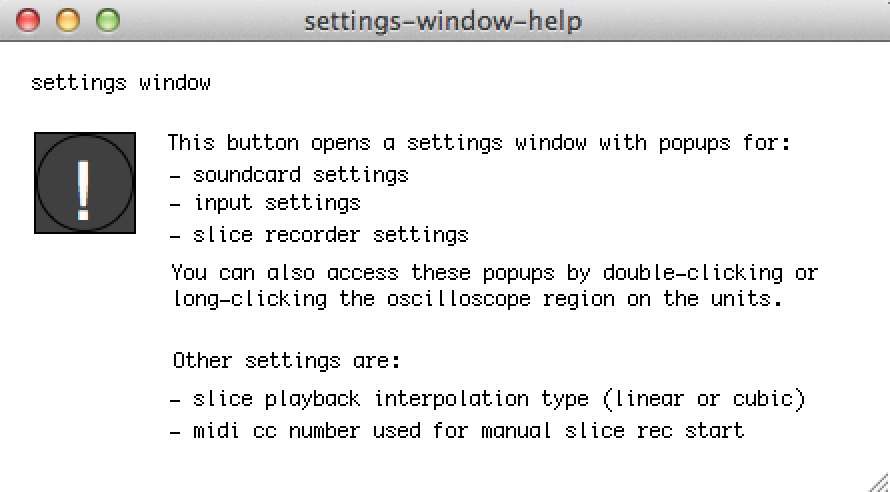
Slice units left and right
Audio/video synthesizer with hacked VGA cables.
By James H. Connolly
http://jameshconnolly.com/rgb-vga-volt
A better tutorial (with warnings) on building the cables, at CrackedRayTube, also by James Connolly with Kyle Evans: http://crackedraytube.com/pdfs/hacking_a_vga_monitor.pdf
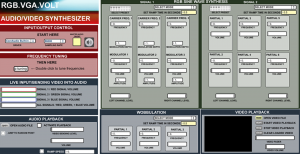
Max patch for controlling the system: http://jameshconnolly.com/rgbvgavolt/RGB.VGA.VOLT.zip
Algorithmic composition and generative music – part 2
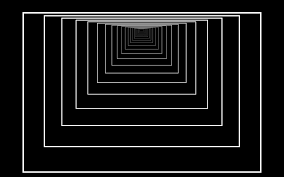
With reactive music, audio is the input. Music is the output. Music can also be the input.
from Wikipedia: http://en.wikipedia.org/wiki/RjDj
“Reactive music, a non-linear form of music that is able to react to the listener and his environment in real-time.[2] Reactive music is closely connected to generative music, interactive music, and augmented reality. Similar to music in video-games, that is changed by specific events happening in the game, reactive music is affected by events occurring in the real life of the listener. Reactive music adapts to a listener and his environment by using built in sensors (e.g. camera, microphone, accelerometer, touch-screen and GPS) in mobile media players. The main difference to generative music is that listeners are part of the creative process, co-creating the music with the composer. Reactive music is also able to augment and manipulate the listeners real-world auditory environment.[3]
What is distributed in reactive music is not the music itself, but software that generates the music…”
Uses dummy clips to apply rhythmic envelopes and effects to ambient sound: https://reactivemusic.net/?p=2658
Making music from from sounds that are not music.
by Katja Vetter
InstantDecomposer is an update of Slice//Jockey. It has not been released publicly. Slice//Jockey runs on Mac OS, Windows, and Linux – including Raspberry-PI
http://www.katjaas.nl/slicejockey/slicejockey.html
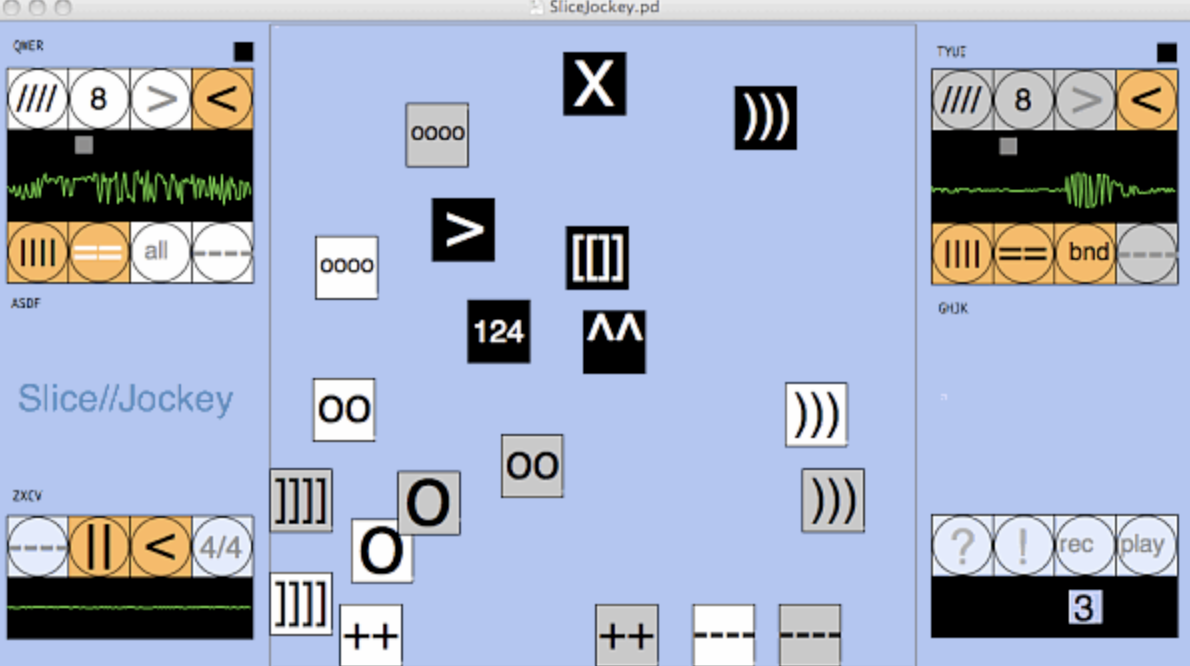
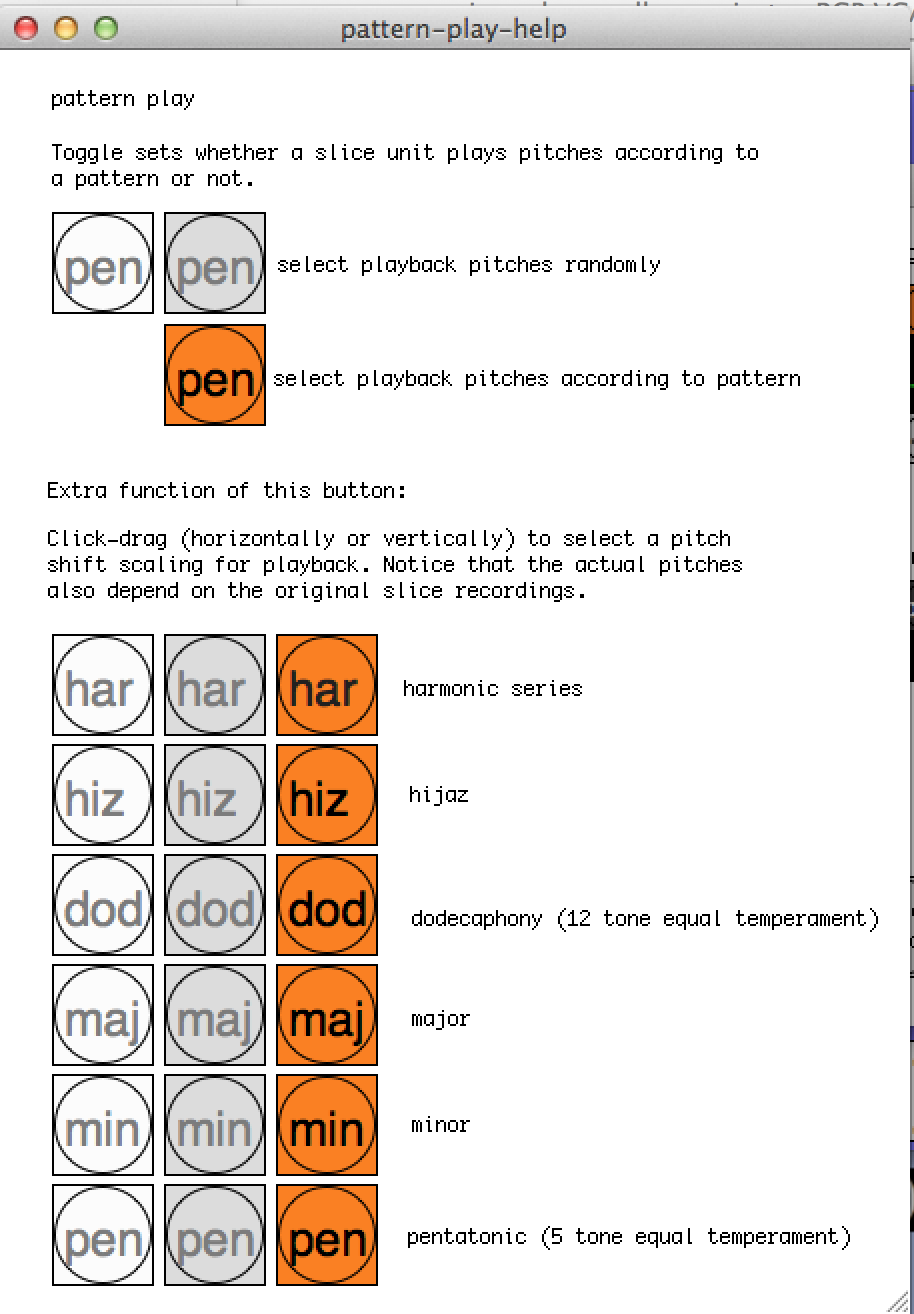
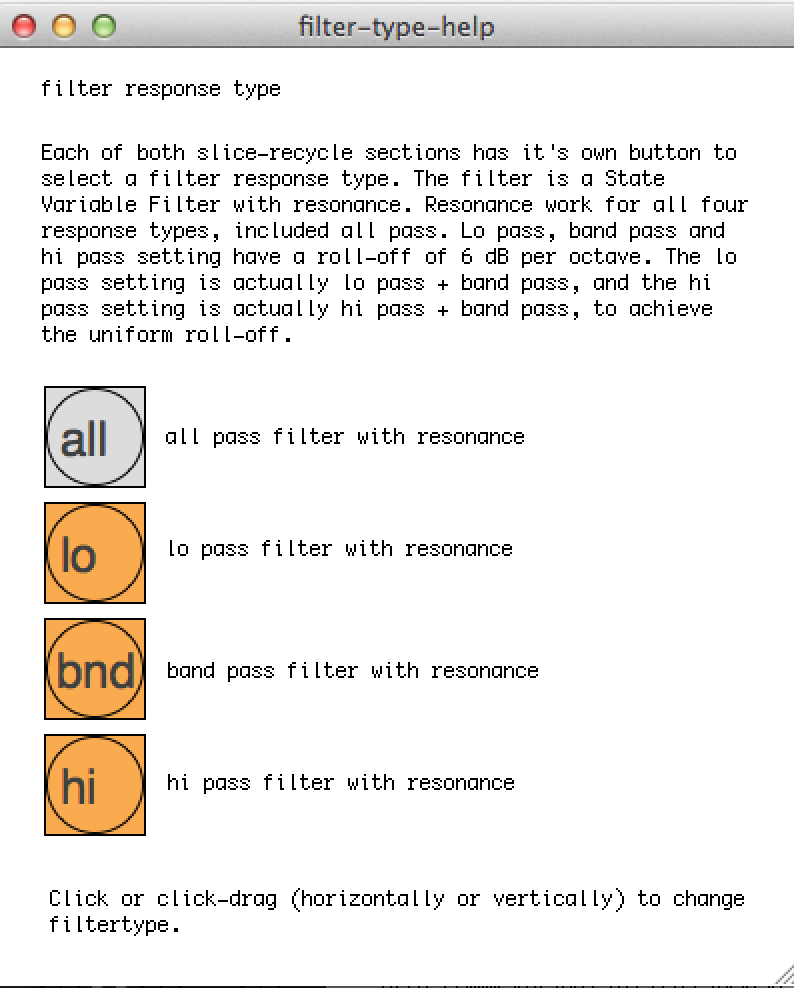
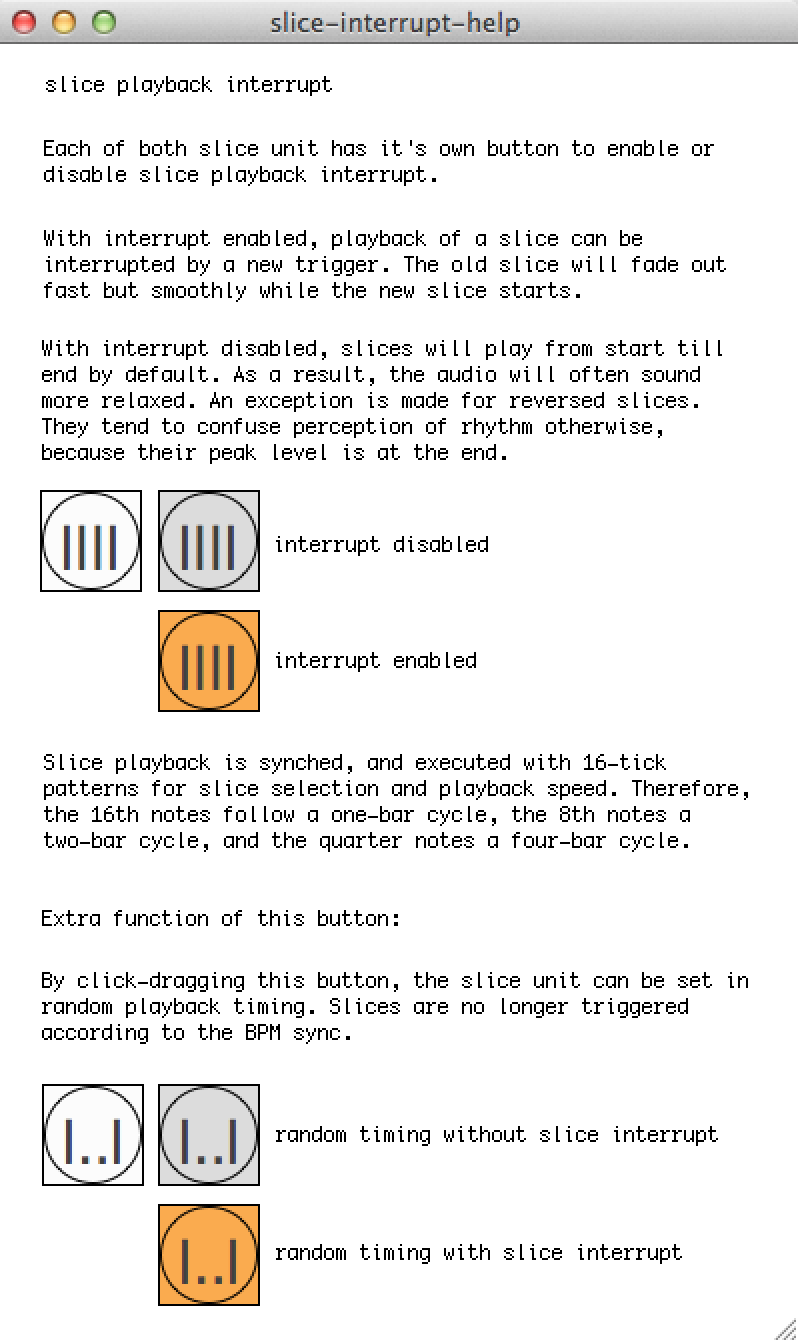
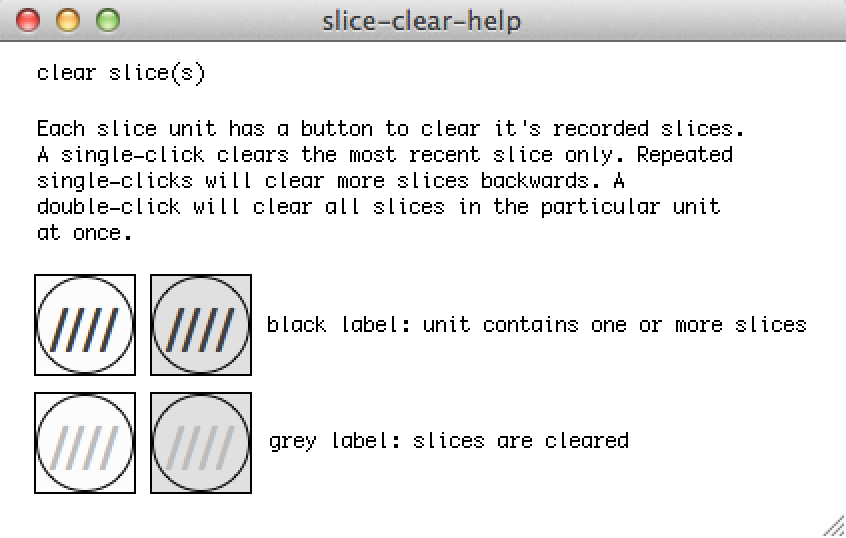
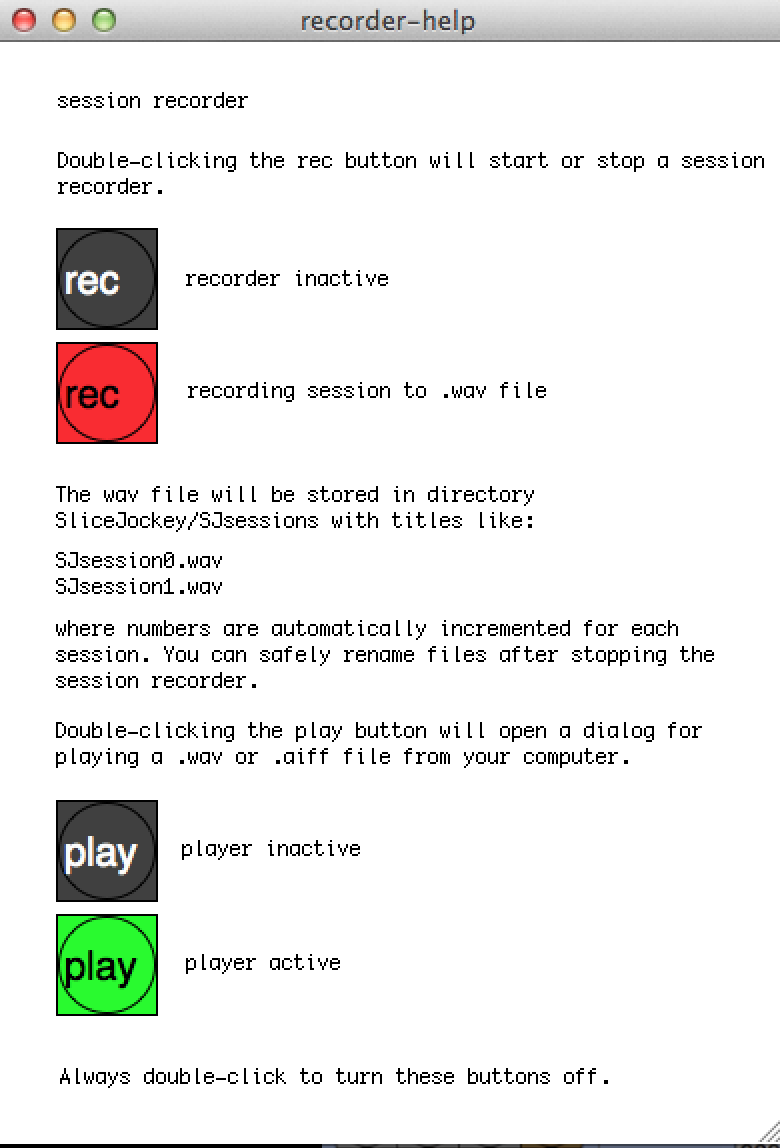
Slice//Jockey help: https://reactivemusic.net/?p=19065
Slice//Jockey is written in Pd (PureData) – open source – the original Max.
By Miller Puckette
Local file reference
A music factory.
By Christopher Lopez
As of iOS 8.2, Dark Knight crashes on load. Inception only works with “Reverie Dream” (lower left corner)
Though RJDJ is a lost relic in 2015. It still works in Pd. The example scenes used here are meant to run under libpd in iOS or Android, but they will actually work in Mac OS X.
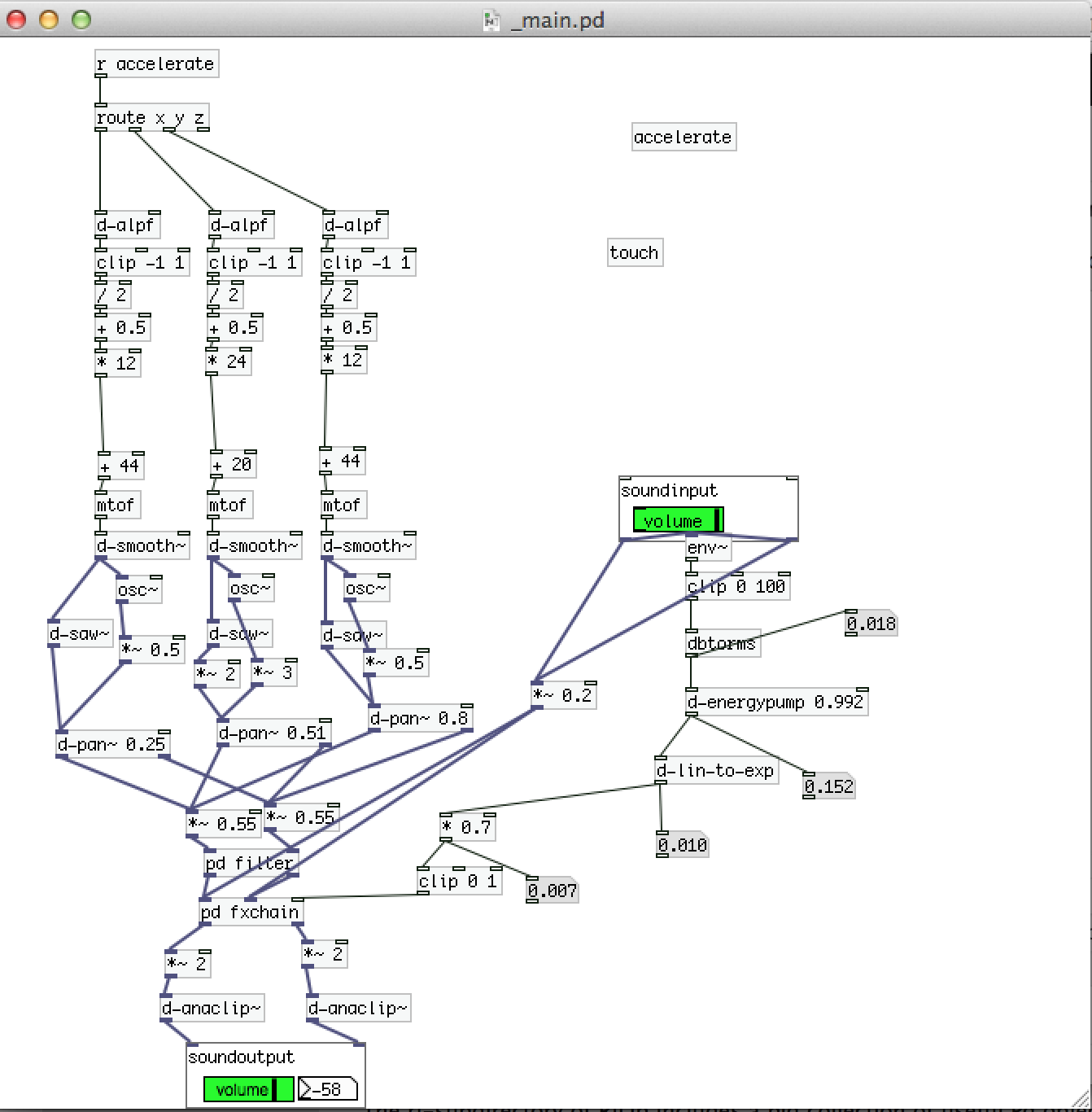
First, use Pd Extended. Ok maybe you don’t need to.
1. Read the article from Makezine by Mike Dixon http://makezine.com/2008/11/03/howto-hacking-rjdj-with-p/
2. Download sample scenes from here: http://puredata.info/docs/workshops/MobileArtAndCodePdOnTheIPhone The link is under the heading “RJDJ Sources”
3. Download RJLIB from here: https://github.com/rjdj/rjlib
4. Add these folders in RJLIB to your Pd path (in preferences)
5. Now, try running the scene called “echelon” from the sample scenes you downloaded. It should be in the folder rjdj_scenes/Echelon.rj/_main.pd
Note: with Pd-extended 0.43-4 the error message: “base: no method for ‘float'” fills the console as soon as audio is turned on.
The ones with marked with a * seem to work well without need for modification or an external GUI. They all have error messages) – and they really are meant to work on Mobile devices, so a lot of the sensor input isn’t there.
to be continued…
Including stuff explained above.
I’m thinking of something: http://imthinkingofsomething.com
More analog video

A scene from a sea otter video processed using ‘Premium Cable’ by BPMC
Two weeks ago Christopher Konopka demonstrated modular analog video. This week we will explore analog video made from found objects and circuit bending. https://reactivemusic.net/?p=18982
Kinect is still your friend, especially if you use Windows.
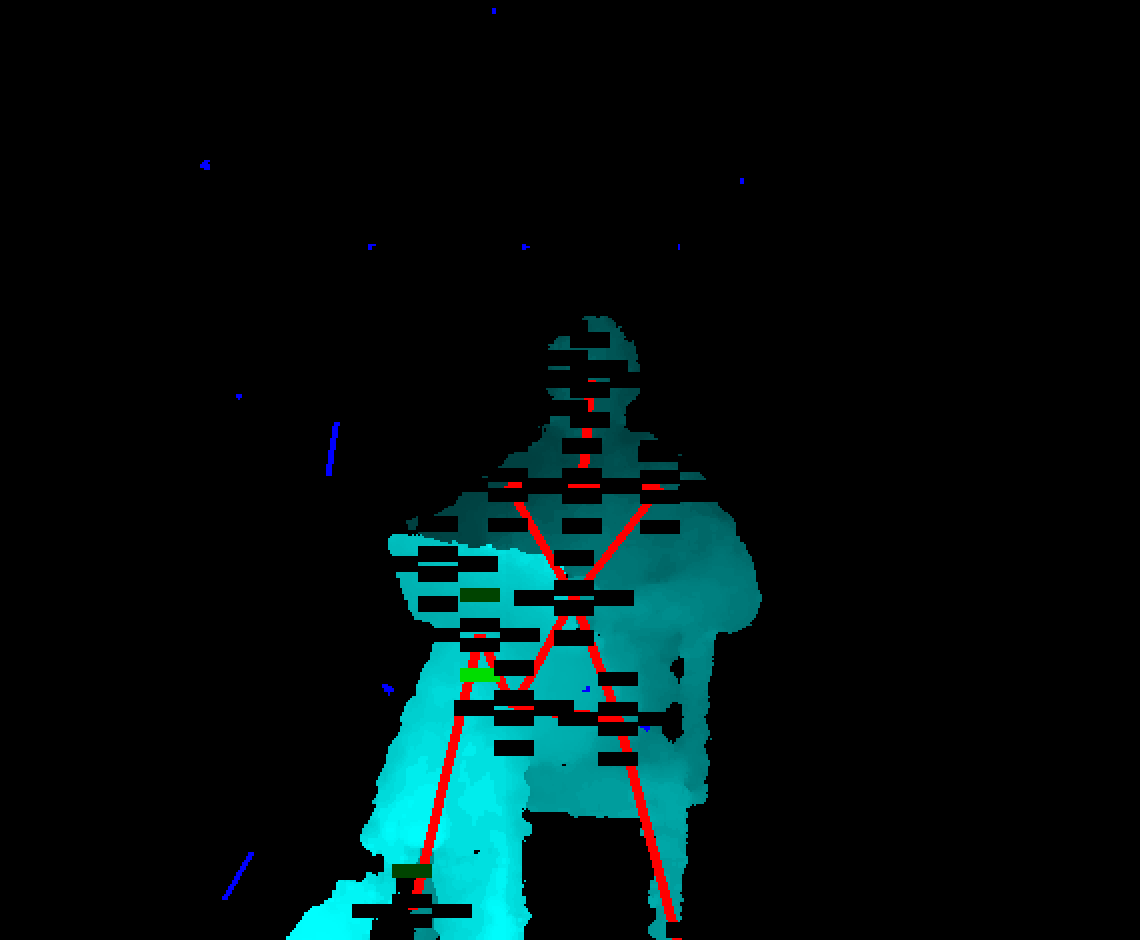
Kinect – revisited: https://reactivemusic.net/?p=18803
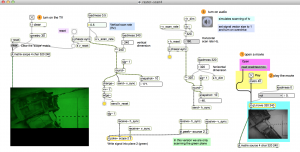
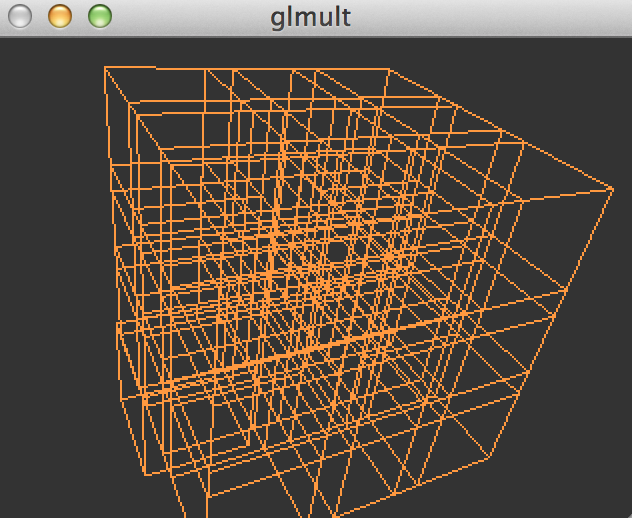
Claire Steeger wrote a new tutorial (with Max patch) called “Simple Intro to jit.gl.multiple” http://www.clairesteger.com/home/simple-intro-to-jitglmultiple. Its shows several ways to modulate complex 3d shapes using audio and data.
Euphony – A webGL Midi file player
by Xueqiao Xu
https://www.chromeexperiments.com/experiment/euphony
I’m thinking of something: http://imthinkingofsomething.com